Spinal decompression is a gentle therapy designed to reduce pressure on the discs and nerves in the neck and lower back. It is commonly used for people experiencing disc bulges, sciatica, neck pain, arm pain, degenerative disc disease, or chronic spinal discomfort.

One of the easiest ways to understand spinal decompression is to picture an Oreo cookie:
Imagine the two chocolate wafers are the vertebrae (the bones of the spine), and the white cream filling is the spinal disc. The disc acts like a cushion between the bones. Over time, poor posture, repetitive strain, injuries, or normal wear and tear can “squish” the Oreo. When that happens, the cream filling starts to bulge outward, similar to how a spinal disc can bulge or herniate. That bulging can place pressure on nearby nerves, leading to pain, stiffness, numbness, tingling, or weakness in the neck, back, arms, or legs.
Spinal decompression works by gently creating space between the vertebrae, almost like carefully pulling the Oreo wafers apart just enough to let the cream settle back toward the center. This can help reduce stress on spinal joints, discs, and nearby nerves. The goal is to improve comfort, mobility, and overall spinal function.
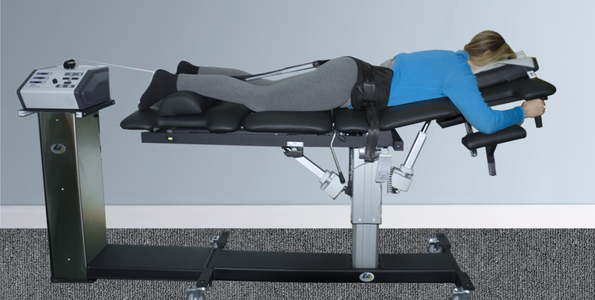
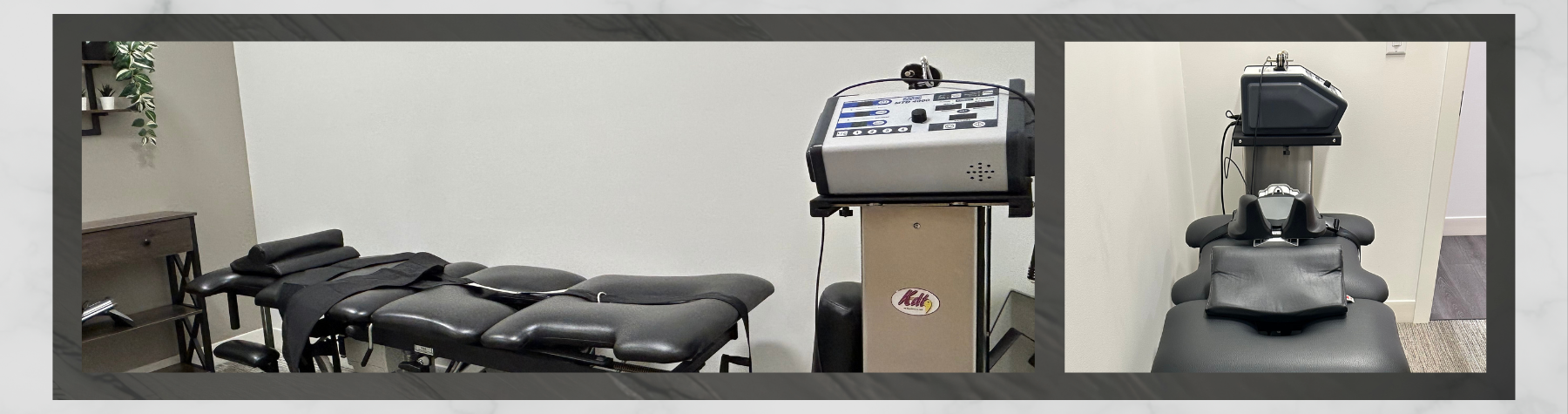
At our clinic, we use the KDT (Kennedy Decompression Table), a computerized decompression system designed to provide controlled traction to the spine, whether it be the neck, midback or lowback. Controlled traction is key because it keeps the muscles in the surrounding area from going into a painful spasm. Unlike older traction devices, the KDT table continuously adjusts during treatment to help the muscles remain relaxed throughout the session.
Most patients describe spinal decompression therapy as comfortable and relaxing. Sessions typically last about 10 to 15 minutes, and many people combine decompression with mobility exercises, rehabilitation, massage therapy, or chiropractic care as part of a broader treatment plan.
While spinal decompression is not appropriate for every condition, it may be a non-surgical option for some individuals seeking support for chronic neck and back pain.